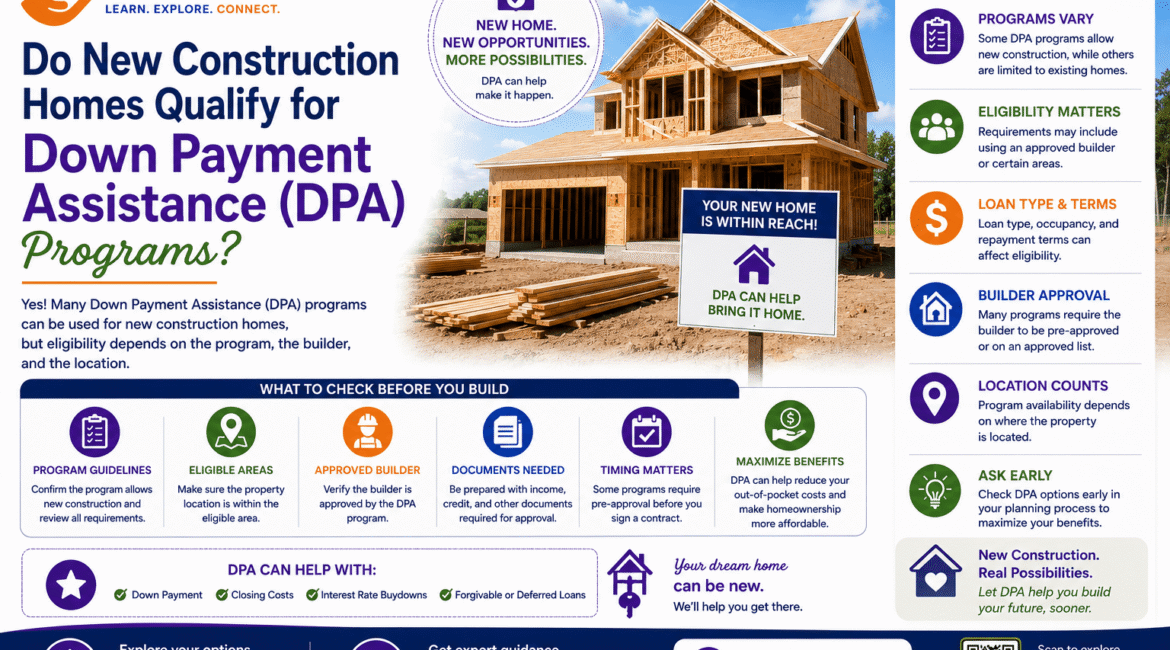
Buying a new construction home offers the exciting prospect of being the very first person to live in the property. From modern designs to energy-efficient features, new construction homes are an attractive choice for many buyers. But if you’re relying on Down Payment Assistance (DPA) to make your dream home a reality, you may be wondering if new construction properties qualify. Here’s what you need to know.
Eligibility of New Construction Homes
The good news is that many DPA programs do allow new construction homes to qualify. However, there are specific criteria and guidelines that the property must meet, which can vary depending on the program.

Key Requirements for New Construction Homes
1. Primary Residence Requirement
Just like existing homes, most DPA programs require that new construction homes be used as your primary residence. Investment properties or vacation homes are not typically eligible.
2. Builder and Development Approval
Some programs have requirements for the builder or the development itself, such as:

- The builder must be licensed and in good standing.
- The property must be constructed in an approved development or community.
3. Completion Timeline
The home may need to be move-in ready within a specific timeframe. For example, some programs require the home to be completed within 6-12 months of purchase agreement signing.
4. Price Limits
New construction homes must fall within the program’s maximum purchase price limits, which vary by location. These limits are designed to ensure affordability and accessibility.
5. Program-Specific Guidelines
Certain DPA programs may have additional requirements, such as:
- Inspections to verify the home meets safety and quality standards.
- Energy efficiency certifications or compliance with green building standards.
Advantages of Buying New Construction with DPA
- Move-In Ready: No renovations or repairs are needed.
- Energy Efficiency: Lower utility bills due to modern building techniques.
- Customization: Many builders allow you to choose finishes and layouts.
Potential Challenges
- Higher Prices: New construction homes can be more expensive than existing homes, potentially affecting eligibility under DPA purchase price limits.
- Delayed Timelines: Construction delays could impact your financing timeline or program eligibility.
- Additional Costs: Upgrades and builder fees may not be covered by DPA funds.
Steps to Ensure Eligibility
- Research Local Programs: Verify that your chosen DPA program includes new construction homes in its eligibility criteria.
- Work with a Knowledgeable Lender: A lender experienced with DPA and new construction can guide you through the process.
- Confirm Builder Approval: Ensure the builder meets all program requirements.
- Check Price Limits: Confirm the home’s price fits within the program’s thresholds.
- Plan for Timelines: Align the construction and closing timelines with the program’s requirements.
The Bottom Line
Yes, new construction homes can qualify for Down Payment Assistance programs, but it’s essential to meet the specific criteria set by the program. With the right planning and guidance, you can enjoy the benefits of a brand-new home while leveraging the financial help you need.