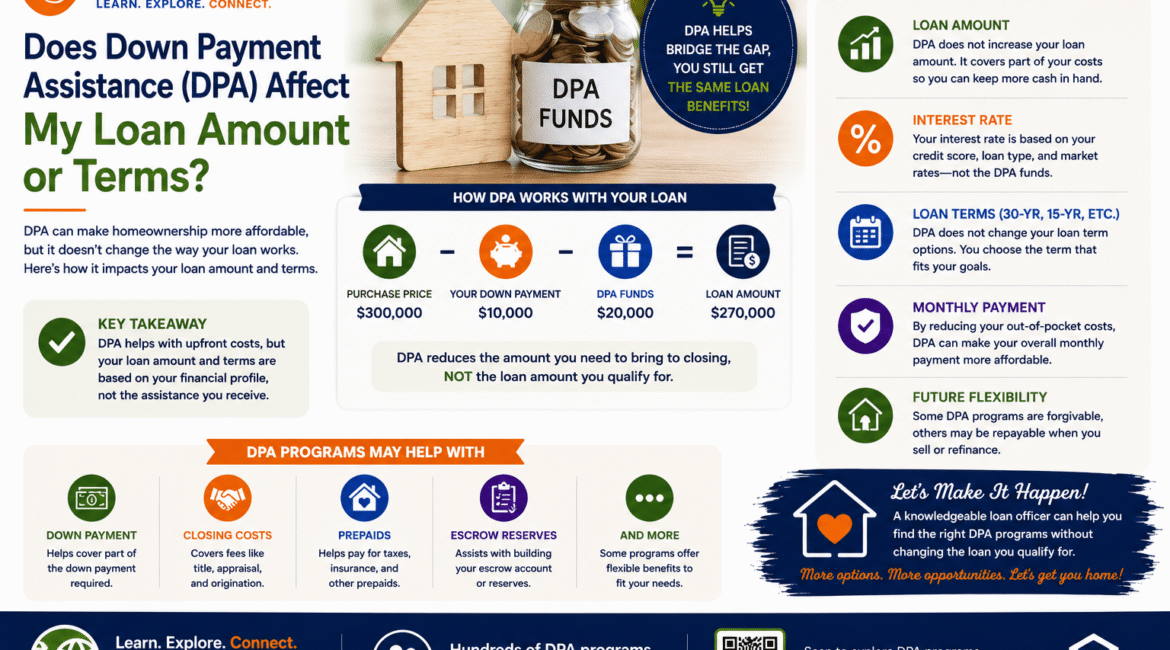
Down Payment Assistance (DPA) programs are a valuable resource for many homebuyers, helping reduce the upfront costs of purchasing a home. However, a common question is whether using DPA affects your loan amount or terms. The answer depends on the type of DPA program and how it interacts with your mortgage. Here’s what you need to know.
How DPA Affects Your Loan Amount
DPA programs directly impact the size of your loan by reducing the amount you need to borrow. Here’s how:
- Reduced Loan Principal: By covering part or all of your down payment, DPA lowers the total amount you need to finance. For example, if you’re purchasing a $250,000 home and receive $10,000 in assistance, your loan amount may decrease accordingly.
- Ability to Avoid Private Mortgage Insurance (PMI): A larger down payment (aided by DPA) may help you reach the 20% threshold required to avoid PMI on conventional loans.
- Improved Loan-to-Value (LTV) Ratio: Lower LTV ratios can lead to more favorable loan terms, as lenders view borrowers with larger down payments as less risky.
How DPA Affects Loan Terms
While DPA doesn’t typically change the type of mortgage you qualify for, it can influence certain aspects of your loan terms:
1. Interest Rates
Some lenders may offer slightly higher interest rates for loans paired with DPA programs. This is because DPA funding often comes with administrative costs or additional risk factors that lenders account for. However, the overall savings from reduced upfront costs often outweigh the minor increase in rates.
2. Loan Program Requirements
The type of loan you use (e.g., FHA, VA, USDA, or conventional) may have specific guidelines for combining with DPA programs. For instance:
- FHA Loans: Widely compatible with DPA, but the assistance must meet FHA’s guidelines.
- Conventional Loans: May have stricter requirements or higher credit score thresholds.
- VA and USDA Loans: These loans often require no down payment, so DPA may be applied to closing costs or other expenses instead.
3. Payment Structures for DPA Loans
If the DPA is offered as a loan (rather than a grant), the repayment terms could slightly impact your monthly budget. Common structures include:
- Forgivable Loans: No repayment required if you meet conditions, such as living in the home for a specific period.
- Deferred Loans: No payments due until you sell, refinance, or pay off the mortgage.
- Low-Interest Loans: Monthly payments added to your mortgage obligations.
Benefits of Using DPA
Despite potential adjustments to loan terms, DPA provides significant benefits:
- Lower Monthly Payments: A smaller loan principal means reduced monthly payments, even with a slightly higher interest rate.
- Increased Affordability: DPA makes homeownership accessible by reducing the upfront costs.
- Greater Flexibility: Allows you to allocate personal funds toward other homebuying expenses or savings.
How to Maximize DPA Benefits
- Understand the Terms: Work with your lender to fully understand how DPA impacts your loan terms and repayment obligations.
- Compare Programs: Research multiple DPA options to find one that offers the most favorable terms for your situation.
- Plan for Long-Term Affordability: Consider how reduced upfront costs will align with your long-term financial goals.
The Bottom Line
Down Payment Assistance can affect your loan amount and terms, but the overall impact is typically positive. By reducing your loan principal and improving affordability, DPA helps make homeownership more attainable. Understanding the specifics of your chosen program will ensure you make the most of this valuable resource.
