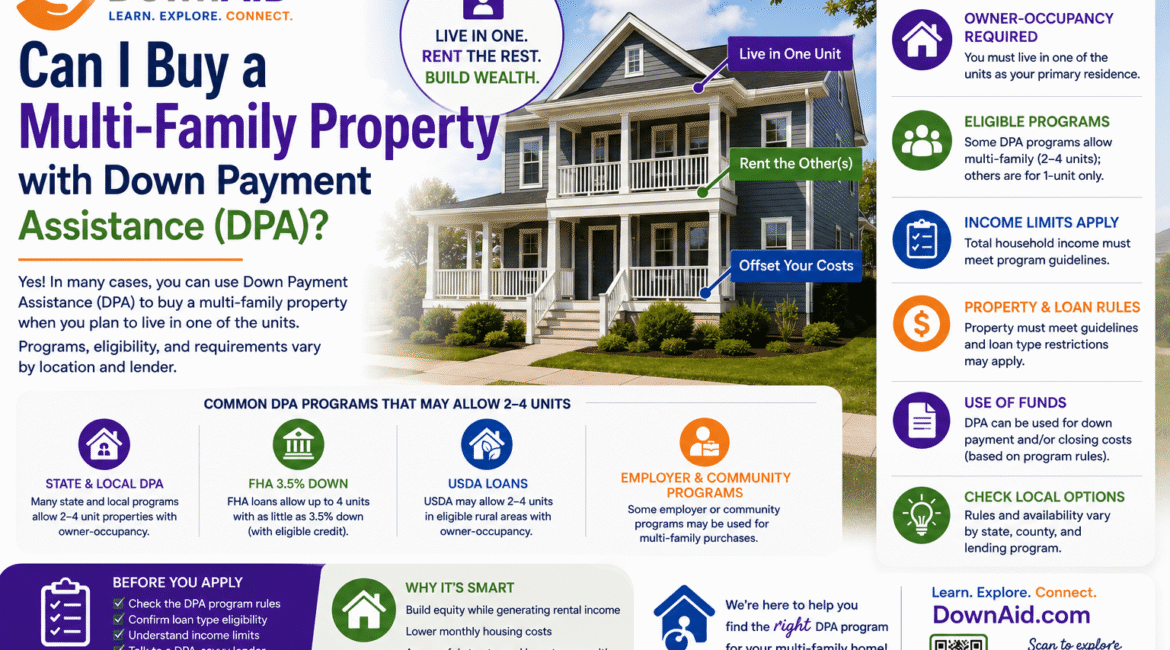
For many aspiring homeowners, the idea of purchasing a multi-family property is appealing. Not only can you secure a home for yourself, but you can also generate rental income from additional units. If you’re considering this option and wondering whether Down Payment Assistance (DPA) programs can help, the answer is often yes — but there are specific guidelines to consider.
Eligibility for Multi-Family Properties
DPA programs often allow buyers to purchase multi-family properties, but the eligibility requirements differ from those for single-family homes. Here are the key factors:

1. Owner-Occupancy Requirement
Most DPA programs require you to live in the property as your primary residence. For multi-family homes, this means:
- You must occupy one of the units.
- The remaining units can be rented out to tenants.
2. Property Size Limitations
DPA programs typically allow multi-family properties with up to four units. Properties with more than four units are classified as commercial and are not eligible for residential DPA programs.

3. Loan Type and Program Compatibility
The type of loan you use can impact your ability to purchase a multi-family property with DPA assistance. Commonly used loans include:
- FHA Loans: These loans allow multi-family purchases with as little as 3.5% down, and many DPA programs can cover this amount.
- Conventional Loans: DPA programs may support conventional loans for multi-family properties, but stricter credit and income requirements may apply.
- VA and USDA Loans: If you qualify, these loans may also support multi-family purchases with DPA assistance.
4. Income and Rent Restrictions
Some programs may impose income limits or require that rents charged to tenants align with local affordability guidelines. These restrictions ensure that the property serves the community’s housing needs.
Advantages of Buying a Multi-Family Property with DPA
- Rental Income: Generating rental income can help offset your mortgage payments, making homeownership more affordable.
- Investment Potential: Multi-family properties offer the opportunity to build wealth over time.
- Shared Costs: Maintenance and utility costs can be shared between units, reducing your overall expenses.
Challenges to Consider
- Higher Costs: Multi-family properties often have higher purchase prices, which may impact your loan approval and DPA eligibility.
- Landlord Responsibilities: Owning a multi-family property means taking on the role of a landlord, with added responsibilities like tenant management and property maintenance.
- Stricter Requirements: Some DPA programs may have stricter eligibility criteria for multi-family properties compared to single-family homes.
Steps to Take
- Research Local DPA Programs: Check the specific requirements of DPA programs in your area.
- Get Pre-Approved: Work with a lender familiar with DPA programs to understand your financing options.
- Evaluate the Property: Ensure the multi-family property meets all program guidelines, including owner-occupancy and unit limits.
- Prepare for Landlord Duties: Educate yourself on landlord-tenant laws and responsibilities.
The Bottom Line
Yes, you can buy a multi-family property with Down Payment Assistance, but it’s essential to meet the specific requirements of your chosen program. By combining DPA with the potential for rental income, a multi-family property can be an excellent investment and a pathway to homeownershi