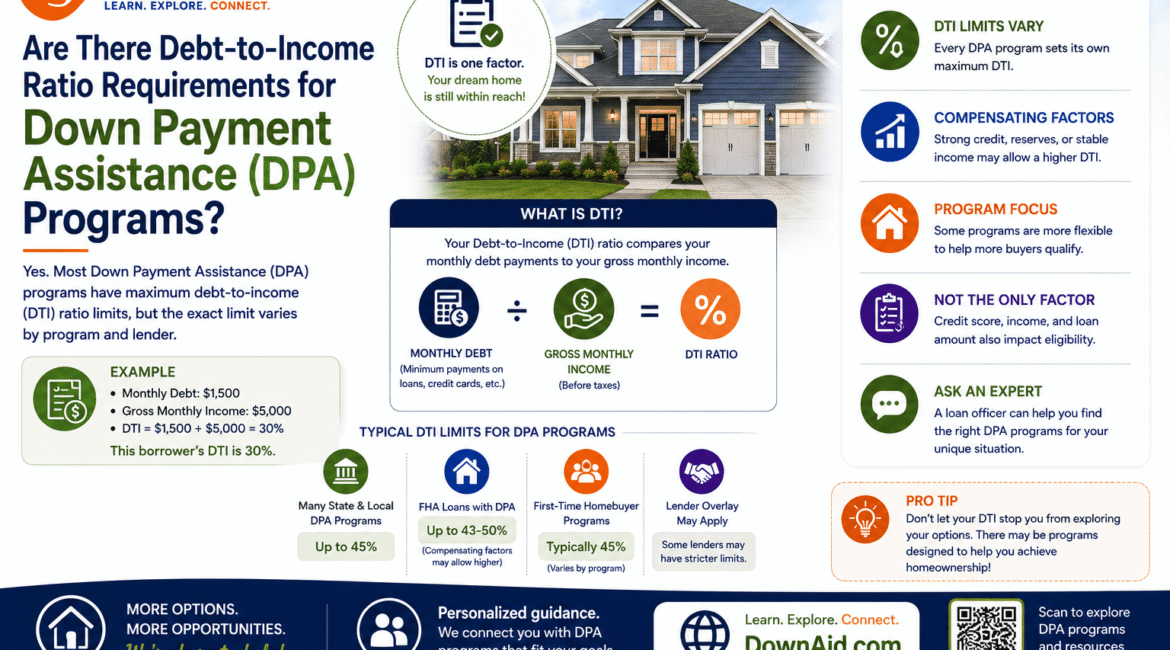
When applying for Down Payment Assistance (DPA) programs, one of the key factors that may determine your eligibility is your Debt-to-Income (DTI) ratio. This metric provides lenders and program administrators with insight into your ability to manage your monthly debt payments alongside your housing costs. So, what is a DTI ratio, and how does it impact your eligibility for DPA programs?
What Is a Debt-to-Income (DTI) Ratio?
Your DTI ratio is the percentage of your gross monthly income that goes toward paying debts. It’s calculated using the following formula:

DTI Ratio = (Total Monthly Debt Payments / Gross Monthly Income) × 100
For example, if your monthly debt payments total $1,500 and your gross monthly income is $5,000, your DTI ratio would be 30%.

Why Is the DTI Ratio Important?
The DTI ratio helps DPA programs and lenders assess your financial stability. A lower DTI indicates that you have more disposable income to cover a mortgage and other housing-related costs, making you a less risky borrower. Conversely, a high DTI ratio might suggest financial strain, which could make it harder to qualify for assistance.
Typical DTI Requirements for DPA Programs
While requirements vary by program and lender, most DPA programs align their DTI limits with the mortgage loan guidelines they support. Here are some general benchmarks:
- FHA Loans: Maximum DTI typically ranges between 43% and 50%, depending on compensating factors like a strong credit score or savings.
- Conventional Loans: DTI limits are generally capped at 45%, but some programs allow up to 50% with strong compensating factors.
- USDA and VA Loans: These programs often allow DTIs as high as 41%, though exceptions can be made based on residual income or other factors.
Some state or local DPA programs may set their own DTI thresholds, which could be stricter than the loan requirements. Always check the specific program guidelines.
Compensating Factors for Higher DTI Ratios
If your DTI ratio exceeds the program’s limits, you might still qualify if you demonstrate other strengths, such as:
- A high credit score.
- Substantial cash reserves.
- Consistent employment history.
- A large down payment (beyond the DPA amount).
How to Lower Your DTI Ratio
If your DTI ratio is too high, consider these strategies to improve your eligibility:
- Pay Down Existing Debt: Focus on reducing credit card balances, personal loans, or car loans.
- Increase Your Income: Take on additional work or explore other income sources.
- Avoid Taking on New Debt: Delay significant purchases until after you’ve secured your home.
- Refinance High-Interest Debt: Lower monthly payments by refinancing debts at lower interest rates.
Exceptions and Alternative Options
Some DPA programs are more lenient and may focus on other eligibility factors, such as your employment history, savings, or credit score, rather than strictly adhering to DTI limits. Additionally, nonprofit or employer-sponsored DPA programs might have more flexible guidelines compared to government-backed programs.
The Bottom Line
Debt-to-Income ratio requirements are an essential consideration when applying for Down Payment Assistance programs. Understanding and managing your DTI can improve your chances of qualifying for these valuable resources. If your DTI ratio is currently too high, proactive steps can help you get closer to achieving your homeownership goals.