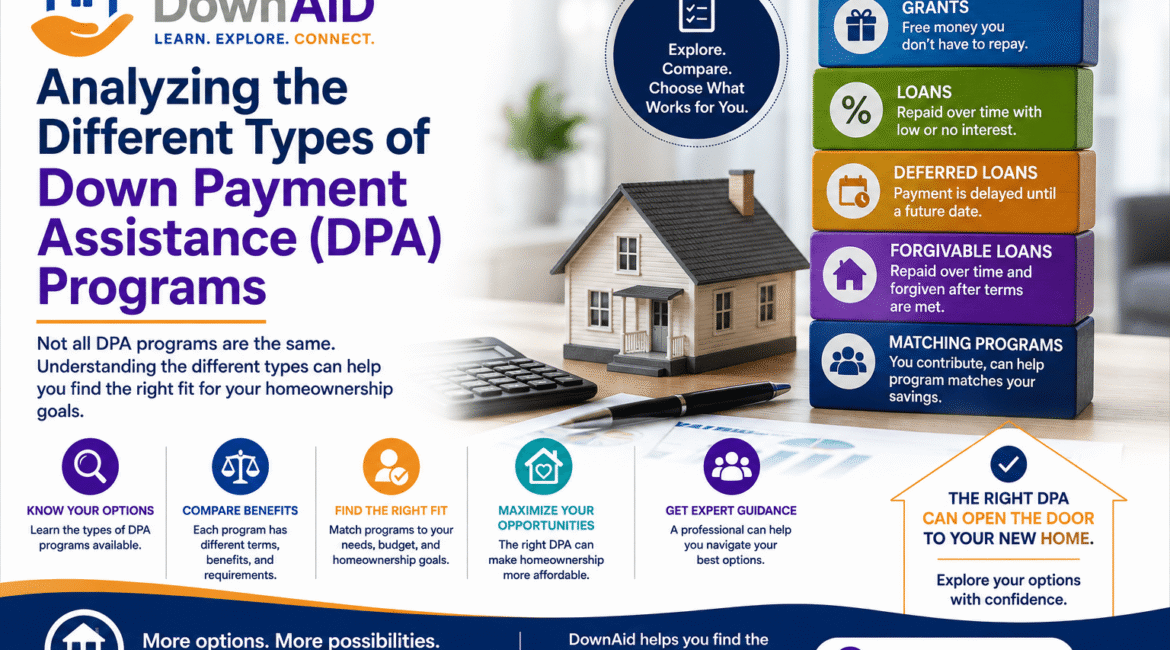
Understanding Your Options to Make the Smartest Move Toward Homeownership
Down Payment Assistance (DPA) programs are designed to help homebuyers—especially first-time buyers—overcome one of the biggest barriers to owning a home: the initial cash needed for the down payment and sometimes closing costs. But not all DPA programs are created equal.
By analyzing the different types of DPAs available, you can better determine which one best fits your financial situation, long-term goals, and homeownership plans.

Why Understanding DPA Types Matters
Choosing the wrong type of assistance can result in higher costs, limited loan options, or complications when selling or refinancing your home. On the other hand, choosing the right DPA can lower your out-of-pocket expenses, improve loan terms, and increase your chances of approval.
Let’s break down the main types of DPA programs so you can make a confident, informed decision.

🔍 1. Grants – Free Money You Don’t Repay
How it works:
Grants are typically awarded by government agencies or nonprofits and do not need to be repaid as long as you meet program requirements (e.g., occupancy for a certain number of years).
Pros:
- No repayment required
- Immediate equity boost
- Ideal for low- to moderate-income buyers
Cons:
- Limited availability
- May come with strict qualification rules
🔍 2. Forgivable Loans – Loans That Disappear Over Time
How it works:
This type of DPA acts like a second mortgage but is forgiven if you live in the home for a specified number of years (often 5 to 10 years). If you sell or refinance early, you may need to repay a portion or all of it.
Pros:
- No monthly payments
- Automatically disappears over time
- Helps bridge the gap without impacting DTI
Cons:
- Repayment may be triggered if you move early
- Conditions vary by lender and program
🔍 3. Deferred Payment Loans – Pay Later, Not Now
How it works:
These are second mortgages with no monthly payments until you sell, refinance, or pay off your first mortgage.
Pros:
- No immediate financial burden
- Great for buyers who expect income growth
- Can be combined with other programs
Cons:
- Must be repaid eventually
- Adds a lien to your property
🔍 4. Low-Interest or Repayable Loans – Pay It Back, Gently
How it works:
You receive a second mortgage to cover the down payment, repaid monthly with low interest over a set term (often 10–15 years).
Pros:
- Easier to qualify for than grants or forgivable loans
- Predictable repayment terms
- Often more flexible income limits
Cons:
- Adds a second monthly payment
- Affects total monthly affordability
🔍 5. Employer or Community-Based Programs – Targeted Local Support
How it works:
Some employers (especially public service institutions) and local governments offer special DPA programs for teachers, healthcare workers, police, veterans, or first responders.
Pros:
- Tailored to your profession or location
- Often lower rates or higher assistance amounts
- May be layered with other DPA programs
Cons:
- Niche eligibility criteria
- May require employer participation or documentation
Choosing the Right DPA for You
When analyzing DPA types, consider:
- How long you plan to stay in the home
- Whether you’re comfortable with a second mortgage or lien
- Your monthly budget and comfort with repayment
- Loan compatibility (FHA, Conventional, VA, etc.)
- Your profession or location, which might unlock additional options