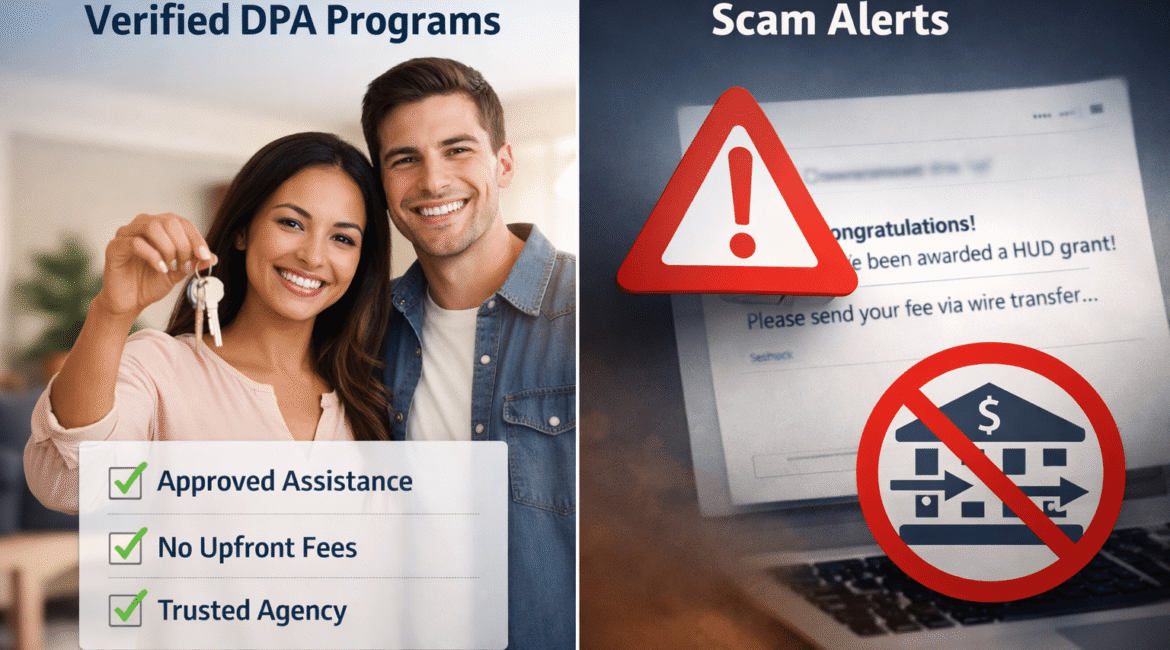
Down Payment Assistance (DPA) programs can be a game-changer for homebuyers. Legit programs can help cover part of your down payment and/or closing costs, making homeownership possible sooner than you thought.
But there’s a catch: because DPA can sound like “free money,” scammers love to use it as bait.
If you’re shopping for help with your down payment, here’s what to watch out for, four real-world scam scenarios buyers have encountered, and practical steps you can take to avoid becoming a victim.
What legit DPA usually looks like
Real DPA programs are typically offered through state or local housing finance agencies, cities/counties, or established nonprofit programs. They come with rules: income limits, purchase price limits, occupancy requirements, approved property types, and often a homebuyer education course.
Also important: legit programs don’t randomly “award” you money out of the blue. HUD’s Office of Inspector General has explicitly warned about fraudsters claiming you’ve been awarded a HUD grant and then asking for fees or personal documents.

Four real-life ways homebuyers get scammed by “DPA promises”
Below are four common scenarios that have happened to real people (or are documented patterns agencies and financial institutions warn about). Use these as a mental checklist when something feels “off.”
1) The “You’ve been awarded a HUD grant” phone call (advance-fee scam)
How it plays out: A buyer gets a call saying they’ve been selected for a large “federal” or “HUD” housing grant. The scammer sounds official, uses government-sounding language, and may even provide a real HUD office address to seem legitimate. Then they ask for personal documentation (like ID) and/or require a wire, certified check, or money transfer to cover “fees.”
A documented example: In HUD OIG’s Fraud Alert: Phony Grant Scams, one example describes a woman who was scammed after being told she’d been awarded a $48,500 grant and only needed to wire $350 via Western Union—after she sent the funds, the “grant” never arrived.
What buyers lose: Money sent for “fees,” plus potential identity theft risk if documents were shared.
2) The “Pay a fee to apply” scam using the name of a real DPA program
How it plays out: Scammers impersonate a legitimate program and tell buyers they must pay to apply, pay to “reserve a spot,” or pay to “expedite” approval. They’ll often push gift cards, payment apps, wire transfers, or “processing fees.”
A real-world warning: Florida Housing’s Hometown Heroes DPA program explicitly warns: there is no cost to apply, and notes that scammers often target homebuyers seeking assistance.
What buyers lose: The fee itself, and sometimes sensitive information submitted through a fake application portal.
3) The “Guaranteed down payment assistance” ad that turns into a paperwork/fee trap
How it plays out: A buyer sees an ad on social media, a flyer, or a website promising “guaranteed approval,” “instant DPA,” or “no qualifications.” The pitch usually includes a fee to start paperwork or to be “considered.” After payment, nothing happens—or the buyer gets generic info they could’ve found for free.
A DPA-specific warning: Clearwater Credit Union describes a “Fake Down Payment Assistance or Forgiveness” scam where criminals advertise guaranteed DPA, collect a fee to begin paperwork, and then provide nothing in return.
What buyers lose: Fees, time, and momentum during a home purchase (which can cost you the house if deadlines pass).
4) The closing-day wire fraud that steals your down payment (often by impersonating someone on your transaction)
How it plays out: Even if you’re using DPA, you may still need to bring some funds to closing. Scammers compromise or spoof email accounts and send fake wiring instructions that look like they’re from your title company, lender, or agent. You wire your funds…and they’re gone.
This is a known, real pattern: The FBI’s Business Email Compromise page includes the homebuyer scenario directly: a buyer receives a message (appearing to be from the title company) with wiring instructions for the down payment—but the message is fake, and versions of this have happened to real victims.
What buyers lose: Tens of thousands of dollars in a single transfer, plus delayed or failed closings.
Red flags: quick ways to spot a DPA scam
If you see any of these, slow down:
- “You’ve been selected/awarded” a grant you never applied for.
- Upfront fees to “unlock,” “reserve,” “expedite,” or “process” DPA.
- Requests for payment via wire transfer, gift cards, crypto, or payment apps (especially to individuals).
- Guaranteed approval or “no verification needed.”
- Pressure tactics: “act today,” “slots are almost gone,” “don’t tell your lender/agent.”
- Any last-minute email that changes wiring instructions (even if it looks legitimate).
How to protect yourself (simple steps that work)
1) Verify the program from the source (not the ad)
Search the program name on official state/city/county sites, or verify through known housing/finance channels. If a “program rep” contacts you, don’t use the callback number they provide—look up the official number independently.
2) Don’t pay to “get” a grant
Legit DPA programs don’t require you to wire money to “release” grant funds. HUD OIG’s bulletin is clear that wiring money to cover “fees” is a hallmark of phony grant scams.
3) Apply through reputable channels (and loop in your lender)
Real DPA is usually coordinated through a participating lender, a housing agency, and/or approved counselors—not a random third party DM’ing you on social media.
4) Treat wiring instructions like a high-risk moment
To avoid wire fraud:
- Confirm instructions by calling a trusted number you already have (not the number in the email).
- Be suspicious of any last-minute change.
- Ask your title company/lender what their safest payment method is (some prefer cashier’s checks or verified portals).
The FBI warns that fake wiring messages have hit real homebuyers.
5) Protect your personal information
Only upload documents through secure, known portals. Be cautious about sending IDs, paystubs, and bank statements over email unless you’re using a secure method.
Want to find legit DPA options faster?
Down payment assistance is real—but finding the right program for your location and situation is the key.
You can search 250+ Down Payment Assistance programs here: Visit out Programs Portal! 🚀
If you think you’ve been targeted
- Stop contact and don’t send more money.
- If you wired funds, contact your bank immediately—minutes matter.
- Report suspected HUD-related grant fraud to HUD OIG (HUD’s fraud bulletin encourages reporting and warns against paying “fees”).